
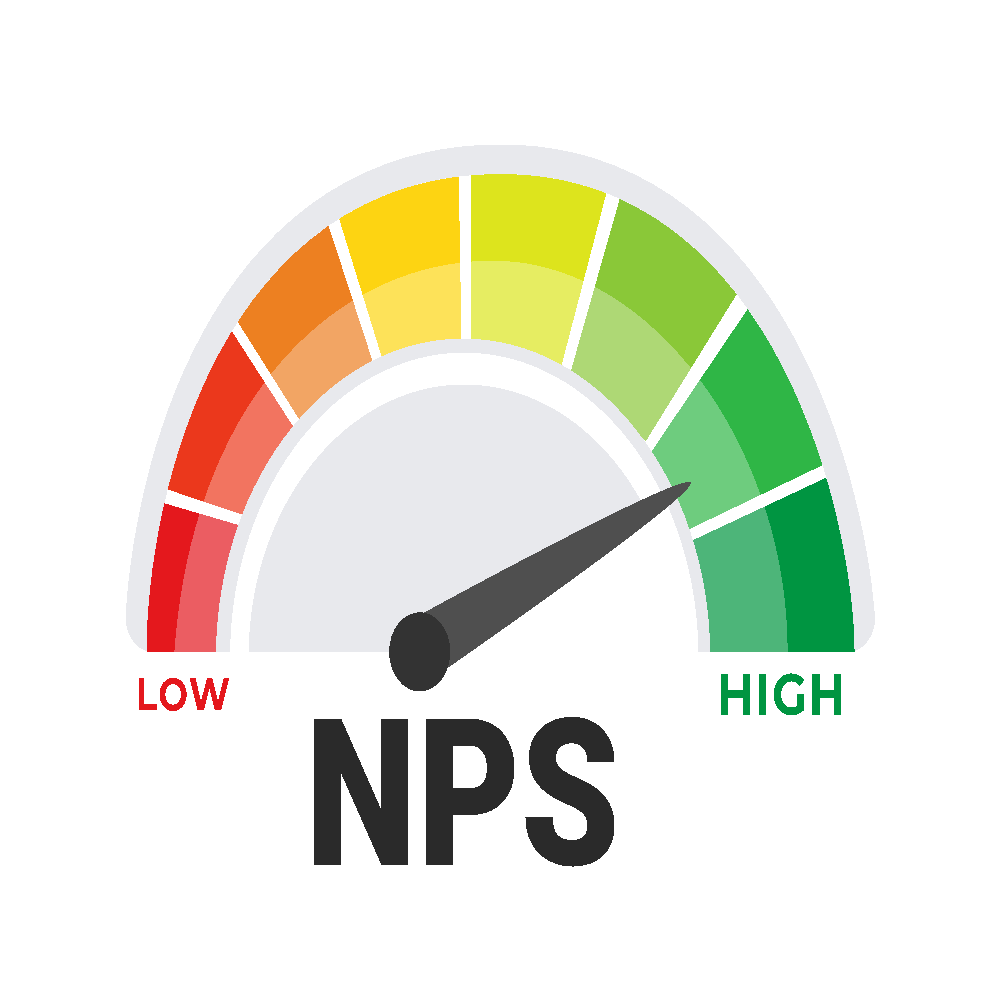
What is a Net Promoter Score?
Many continuing education providers use evaluations to assess what their learners think about an individual educational product. Occasionally, an organization will conduct a member-wide survey to collect information on the educational opportunities provided. Seldom, if ever, do continuing education providers conduct a Net Promoter Score (NPS) survey. As a part of a blog series about things InReach does that you should consider doing, I propose you start doing an annual NPS survey.
What is a Net Promoter Score? It represents a percentage you calculate by asking your customers or members a single question on a 10-point scale: “On a scale of 1–10, how likely are you to refer XXXXX to a colleague?” While the wording may vary slightly, you collect data that measures the loyalty of your members or customers. Sometimes you also ask a second question to learn the reason behind the score. Citation.
NPS Scores
To determine the NPS you subtract the percentage of respondents who are detractors from the percentage of respondents who are promoters. Responses scored at nine and 10 are identified as Promoters. Zero through six responses are identified as Detractors. Scores of seven and eight are considered Passives. Passives are included in the total number of respondents, but are not counted towards the final score.
The Harsh Reality
Granted, the NPS can be harsh. InReach staffers have objected to eights and sevens being considered passive. Their argument is a good one. “We would go eat at a restaurant that receives an eight out of ten rating, right?” However, the NPS survey seeks to identify those customers that would be passionate about their recommendation; thus, the limit in identifying the nines and tens as promoters.
A Net Promoter Score can be as low as -100% and as high as 100%. Anything above 50% is generally considered excellent. Citation. Many companies identify benchmarks and measure themselves against competitors. While fun to do, what you should really be doing is measuring your scores from year to year to track your status.
Analyze Net Promoter Score
InReach does this every year and analyzes the results to develop action items. If we scored lower than the year prior, why? What did we do differently? What do we need to fix? If we scored higher than the year prior, why? What did we do differently? Should we do more of whatever made the difference? NPS is an assessment that forces you to focus on your overall success and keeps you from making guesses on how you are doing based on comments received from clients in day-to day business interactions. At the very least, the NPS can be a client conversation starter for you.
Leveraging Loyalty
Client Success Managers urge associations, law schools, teaching hospitals, and other clients to leverage member and customer loyalty when promoting products. Most of your members likely show strong loyalty, and that assumption is probably true. However, you won’t know for sure until you survey them and gather an NPS.
If your members aren’t willing to refer a colleague to you as an educational provider, you need to find out why and work consciously to increase that score. Eighty percent of American seek recommendations when making a purchase. Citation. To improve, engage with your Promoters, Detractors, and Passives to improve their experience and learn from them. Citation.